
 What comes in from WHOOP
Recovery, sleep score, sleep duration, efficiency, disturbances, deep, REM and light sleep, bedtime and wake time. HRV, resting heart rate, skin temperature, blood oxygen, strain and time in the high heart rate zones.
WHOOP does not send steps or breathing rate, so those stay empty unless another source fills them. Stress is worked out by MigraineMe from your HRV and resting heart rate.
 What MigraineMe does with it
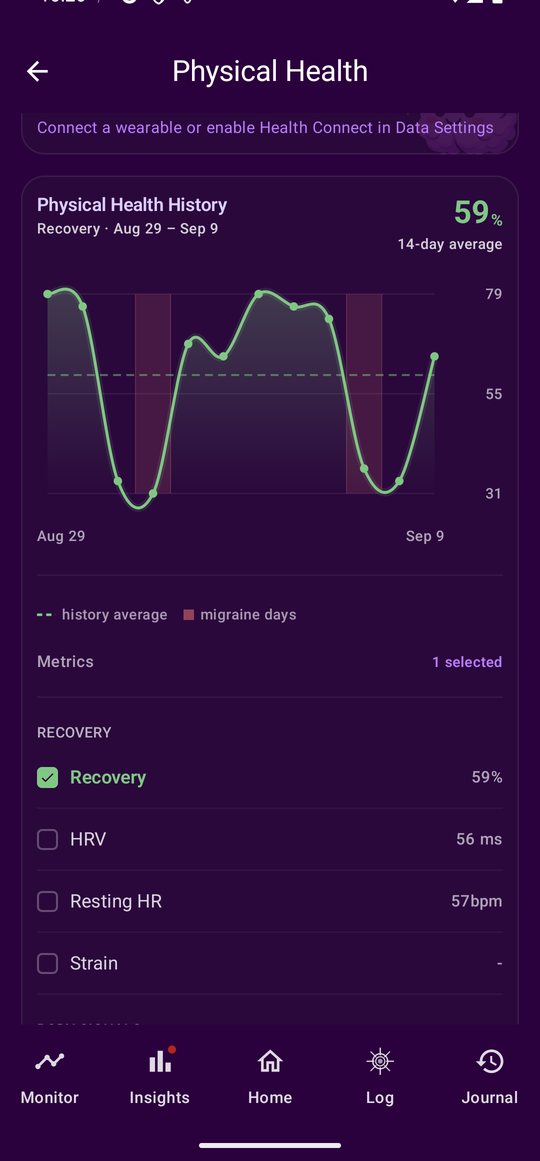
Your nights and days are lined up against your logged attacks. Sleep duration, sleep score, deep, REM and light sleep, bedtime, wake time, recovery, stress and steps can each fire as an automatic trigger when they cross your own line. HRV, resting heart rate, blood oxygen, skin temperature and breathing rate count as early signs.
All of it feeds your daily risk score, shows up in Monitor with your migraine days marked, and can go on the Health metrics page of the PDF report you take to your doctor. The report is part of Premium.
 How to connect
Open the side menu, tap Connections and pick WHOOP under Connected Services. You sign in with your WHOOP account and that is it. Connecting is free and works the same on Android and iPhone.