
 Add food in seconds
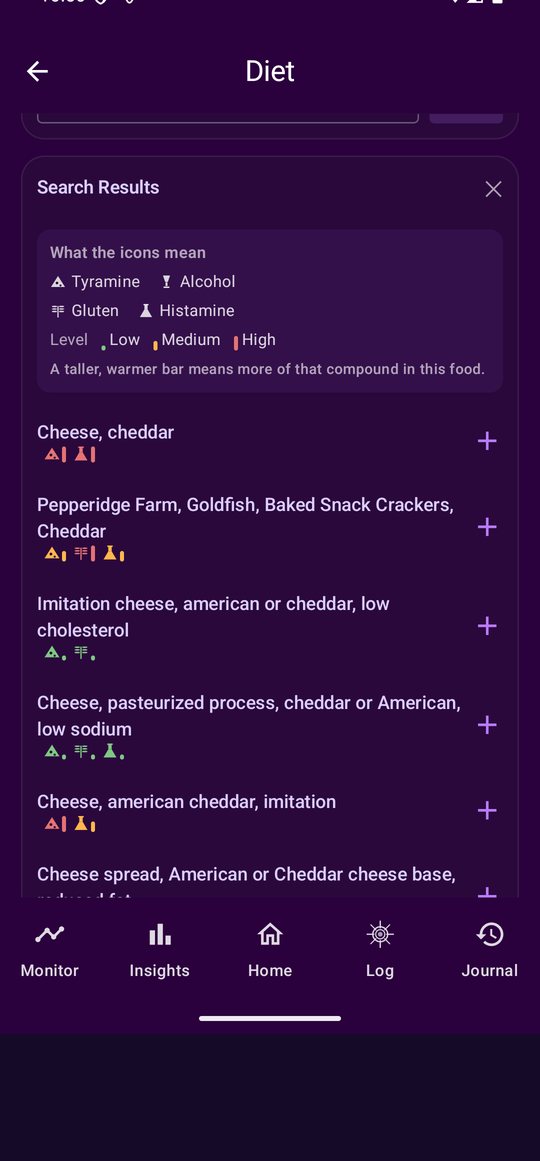
Search the USDA database or scan a barcode. Cheddar, a supermarket cracker, a glass of red: each comes back with calories and macros and, more usefully, with its tags.
 Tagged for tyramine, histamine, gluten and alcohol
Every result is marked for the four compounds, low to high, so a day's log adds up to tyramine high, histamine high before you have had a single symptom. Those tags are triggers, and they get the same statistics as everything else. Red wine, for the record, is a histamine trigger.
 Or let your food app feed it in
Already logging in MyFitnessPal or Cronometer? Connect it and the day's food and totals come across on their own.
Where it lives in the app
Log → Food. Search the USDA database or scan a barcode, and every result comes back tagged for tyramine, alcohol, gluten and histamine on a low-to-high scale, so you see the migraine side of a food before you eat it. Today's log sits under the search, and Monitor → Diet keeps the 14-day history with your migraine days marked.
What it needs from you
Nothing, unless you want it automatic. A nutrition app can feed the day in through Health Connect, but it can only be classified when it writes per-item entries with a food name; apps that send daily totals only cannot be tagged. Log the trigger foods by search or barcode and you get the classification either way.