 Six categories, one evidence line each
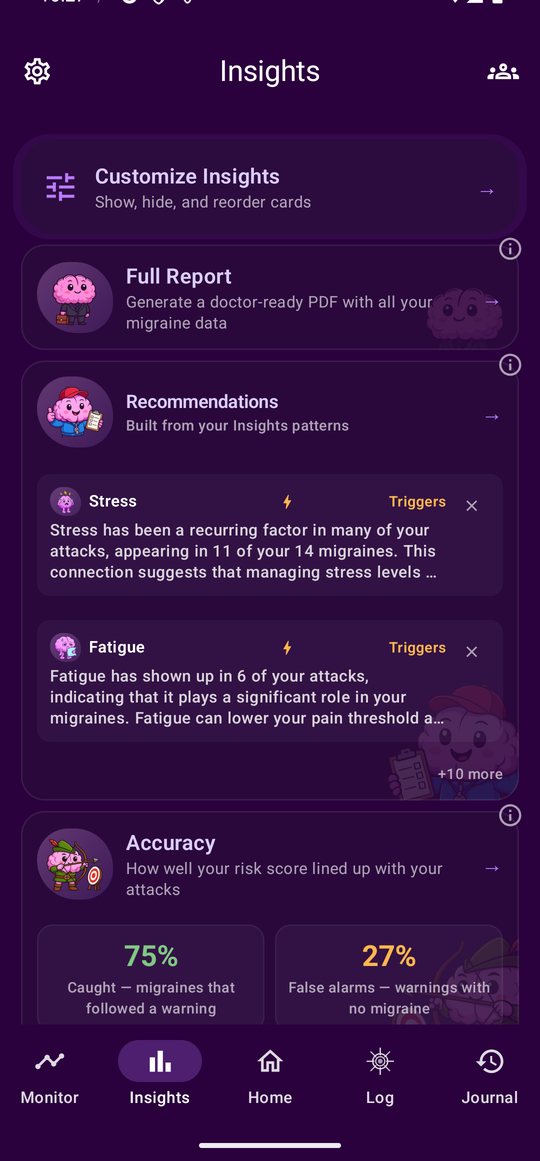
Triggers get a preventive action tied to your pattern. Prodromes get interventions that may abort or shorten an attack when your early signs appear. Medicines get rebound and overuse flags for triptans, NSAIDs, paracetamol and opioids, alternatives when something is not relieving well, and prompts to raise with your doctor. Reliefs get the same angles for non-drug methods. Activities link your timing of exercise, sleep and stress to context like cortisol and dehydration. Symptoms that run high or severe get targeted prep: an anti-emetic on hand, a dim-room kit, a postdrome plan.
Each recommendation comes with a short evidence line so you can see why it is being suggested.
 Dismiss it and it stays gone
Dismiss anything that does not match your reality and it will not come back. A recommendation built on a genuinely new pattern can resurface, because the evidence is different.
 Starting points, not diagnoses
These are things to discuss with your neurologist, built from your own usage. They do not replace medical advice and the app says so on the screen.
Where it lives in the app
Insights → Recommendations, grouped by category, each one carrying the evidence line it was built from and a dismiss action. Daily insights appear on Home when there is something worth saying about the day you are in.
What it needs from you
Enough history for the patterns to exist, and Premium: recommendations are part of the analysis layer with the 7-day forecast, the chat, the full contributor list, the report PDF and the weekly calibration.